
How admiration becomes avoidance—and how to reclaim the fire you keep giving away
You know that potential you keep seeing in other people? The version of them you can picture so clearly—even when they refuse to see it for themselves?
There is a particular kind of exhaustion in seeing potential in everyone but yourself.
How long did you stay in relationships trying to convince someone to become who you knew they could be? How many times did you leave feeling defeated, deflated, and wondering why your belief was never enough?
Because you were never only seeing them.
You were seeing what you would do with their gifts, their opportunities, their circumstances, their life. You were projecting your own vision, discipline, courage, and ambition onto someone who had not chosen the life you could see for them.
The fire was yours. You just kept giving it away.
That’s where admiration becomes avoidance: when you pour your belief into someone else’s potential while using their circumstances to disqualify your own. The more energy you invest in who they could become, the easier it is to postpone who you are becoming.
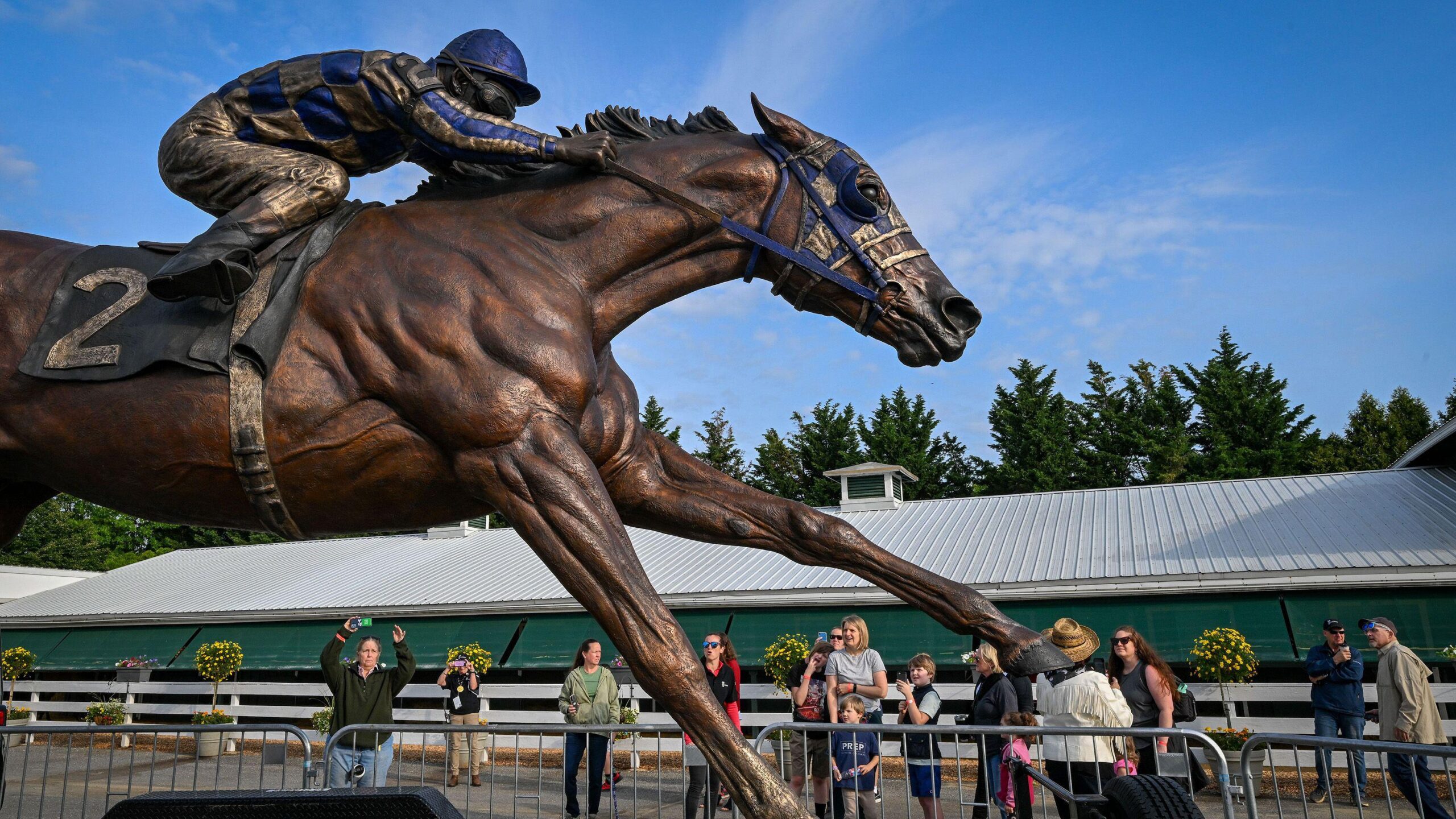
This Leo season, I keep returning to the energy of the Fire Horse as a symbol of movement, instinct, independence, and creative courage. Not reckless motion. Not performance for the people in the stands. The kind of movement that begins when you stop waiting for permission, reclaim your direction, and put action behind your own potential.
“The fire was yours. You just kept giving it away.”
Admiration Can Become Avoidance
Have you ever been in awe of someone? Their energy, appearance, financial status, inner circle, and relationship all seem effortless. You admire who they are and what they have. You begin to see them as a model for the life you want.
That’s not a bad thing. It’s healthy to have something to aspire to.
The shift happens when admiration turns into comparison.
Soon, you stop seeing their success as evidence of possibility and start using it as evidence against your own becoming.
Self-doubt appears like a dark stain across your spirit.
Your energy changes when you see them. What once felt aspirational now fills you with doubt—or even envy.
The life you want begins to feel farther away from you, yet somehow perfectly attainable for the person you once admired.
Their success no longer expands your sense of possibility. It starts shrinking your belief in yourself.
The dark stain widens until it finds a voice:
You’ll never get there, so why try?
You don’t have what it takes. Quit. What’s the point?
It feeds your self-doubt a looping script—one that repeats until giving up begins to feel like reason instead of fear.
Before long, the admiration you once felt twists into self-doubt and avoidance.
Your motivation dries up.
Your momentum stalls beneath you.
Your light dims, and the fire that once drove you is slowly snuffed out.
Admiration has become avoidance—and someone else’s life is now being used as evidence against your own.
What they have isn’t proof that possibility belongs to them and only them. Their circumstances shaped their path; they don’t set the terms for yours.
Their starting point belongs to their race. Yours belongs to you.
Good Is Enough
Once you stop using someone else’s circumstances to disqualify your own, perfection often steps in to finish the job.
It tells you that you can begin—just not yet.
You’re not ready yet, it whispers, over and over.
Not until your body changes.
Not until your plan is airtight.
Not until your platform is larger.
Not until the timing is right.
Not until you have more energy, support, money, confidence, or certainty.
Perfection rarely says no. It says later. It says more.
And later can keep you rehearsing a life you could already be living.
Where you are right now is good enough to begin.
Release perfection as a condition for living.
You are exactly where you’re meant to be—and where you are has enough ground to take the next step.
“Where you are right now is good enough to begin.”
Step Out of the Shadows
Once you decide that you are enough––and where you are has enough ground to begin––you have to let yourself be seen standing on it.
Leo season doesn’t ask you to become louder, shinier, or more performative. It asks you to stop confusing invisibility with safety.
Step out of the shadows created by voices that taught you to remain small, agreeable, and easy to overlook.
The voices that warned you not to take up too much space.
Not to outgrow the people around you.
Not to become too visible, too ambitious, too difficult to understand, too much.
But being seen does not mean turning your life into a performance. It doesn’t require you to become someone else for the comfort or approval of an audience.
It means stepping into the light and no longer disappearing from your own life.
It means taking ownership of who you are, what you create, and the space your presence occupies.
It means refusing to give your fire away.
Let yourself find the people who recognize you.
Let your work connect with opportunity.
Let the life you’re building bear your fingerprints.
Visibility begins when you stop abandoning yourself in order to remain understandable and digestible.
Speak From Scars, Not Wounds
Stepping into the light does not mean stripping yourself bare.
Being seen does not require exposing every tender part of your life. You don’t owe an audience unfettered access to experiences you’re still trying to understand, survive, or heal.
Some wounds need privacy before they can become language.
Protect what is still tender. Do not invite people close enough to pour salt into a wound you’re still tending.
Privacy is not the same as hiding.
Hiding asks you to disappear. Privacy allows you to decide what is yours to hold, what is ready to be shared, and who has earned the right to witness it.
Scars are different.
Scars carry lived experience. They hold the shape of what happened without leaving you open inside it. They allow you to speak with perspective and earned wisdom rather than from the urgency of fresh pain.
You can share what has been integrated without turning your healing into public property.
You can tell the truth without telling everyone everything.
You can be seen without surrendering your boundaries.
Your scars hold lived experience. Speak from earned wisdom and protect the wounds still asking for care.
“You can be seen without surrendering your boundaries.”
Let Creativity Flow
Once you stop treating visibility as exposure, creativity has room to breathe.
Expression and performance are not the same thing.
Expression begins with truth, curiosity, pleasure, instinct, and self-trust.
Performance begins with the question: Will this make me worthy of being seen?
Creativity constricts when every idea has to prove something.
That you are talented enough.
Original enough.
Polished enough.
Successful enough.
Perfection makes you manage the fire instead of expressing it. You become so focused on controlling how your work will be received that you lose connection with the creative spark that started it.
Being visible does not mean constantly performing confidence. You’re allowed to experiment, change direction, make imperfect work, and create before you know exactly where it will lead.
Take ownership of the space you create, then allow yourself to move freely within it.
Follow what feels alive.
Trust what keeps returning.
Create because something within you is asking to take form—not because you need the finished product to prove your value.
When creativity no longer has to prove your worth, it becomes free to reveal your voice.
Silence the Spectators
The moment you begin moving in your own direction, the spectators will have opinions.
They will tell you how they would run.
When they would begin.
What they would risk––or wouldn’t.
What they would change.
What they would never do.
But they are not carrying your body.
They are not carrying your history, your capacity, your responsibilities, your risk, or your vision.
They are watching from the stands while you are the one inside the arena.
Their opinions are filtered through their own fears, limitations, experiences, and projections.
You do not need everyone to understand your direction before you move.
Some people will only recognize a path after it has already been built. Their inability to see what you see doesn’t make your vision less real.
Their shortsightedness cannot become your limitation.
Listen for your own voice beneath the noise.
Trust the intuition that keeps pulling you forward.
Feel the fire that returns when you stop asking the crowd for permission.
Advice can inform you. Discernment can protect you. But your life cannot be run by a vote.
Your race isn’t run by consensus—you are the driving force.
“Your race isn’t run by consensus—you are the driving force.”
Run Your Race
Silencing the spectators is only part of the work. At some point, you also have to stop looking sideways at the other runners.
No one can run your race for you.
Stop looking left and right for proof that you’re keeping up.
Stop looking backward for approval from people who were never meant to choose your direction.
Look at the ground beneath your own feet.
Movement does not have to be fast, forceful, or dramatic to be real. It can be slow. Adaptive. Body-aware. It can change shape as your capacity changes.
A smaller step is still a step.
A pause doesn’t erase your progress.
Rest can hold gains of its own.
Choosing a different route doesn’t mean you’ve lost your way.
The Fire Horse does not ask you to move recklessly. It calls you back to instinct, independence, and self-possession—to the part of you that knows when to surge forward, when to adjust your pace, and when to trust the path before anyone else can see where it leads.
You don’t need the entire course mapped before you move.
You only need enough ground for the next aligned step.
The stands may be loud. The path may not make sense to everyone watching. You may still be learning to trust the fire you spent years directing toward everyone else.
Feel it anyway.
Own it.
Move with it.
Run your race.